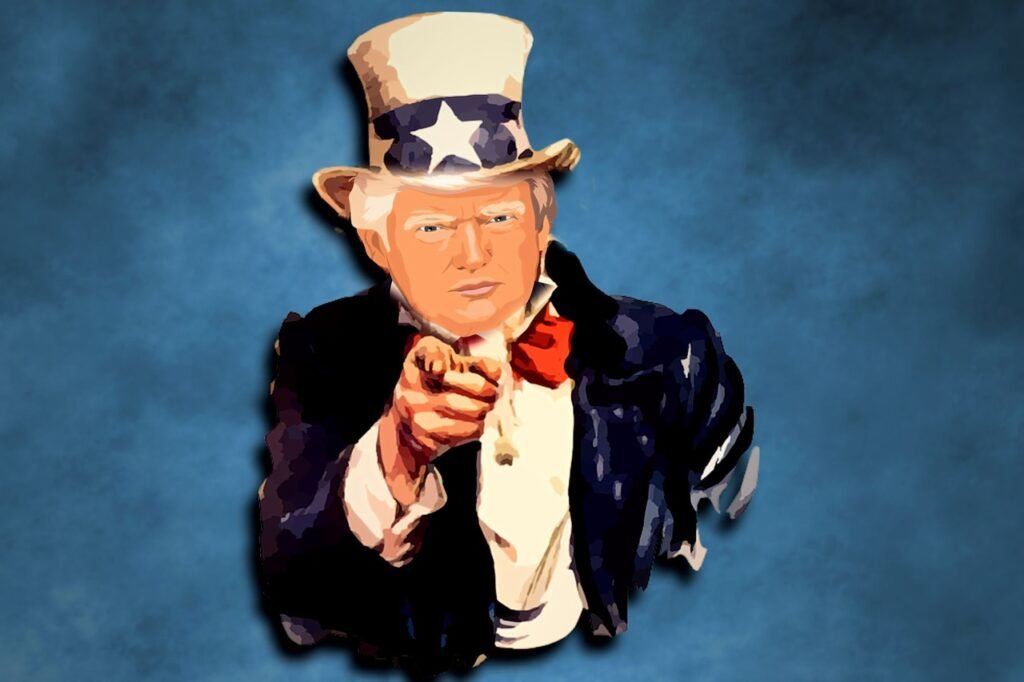
Since returning to the U.S. presidency in 2025, Donald Trump has launched an unprecedented tariff offensive against allied countries and key trading partners. It’s the peak of a policy driven more by authoritarian rhetoric than by sound economic strategy — a true case of economic bullying.
An Authoritarian and Unilateral Approach
Trump imposed steep tariffs — 50% on Brazilian goods, 25% on imports from Japan, Canada, and Mexico, and up to 55% on Chinese products — all based on vague claims about trade deficits or political alignment (as seen in accusations against former President Bolsonaro).
These measures are implemented regardless of World Trade Organization rules or long-standing trade relationships. Economists harshly criticize the lack of strategic planning, warning that the exclusive focus on goods deficits ignores the role of services and global supply chain complexity.
The World as a Target: No One Is Safe
While most world leaders pursue multilateral agreements, Trump stands alone as the only global leader systematically issuing tariff orders year after year. He’s imposed bilateral tariffs on over 90 countries — including NATO allies, the EU, and emerging economies such as Brazil, Japan, and South Korea.
This coercive strategy often blurs the line between personal and national interests — as seen when Bolsonaro’s legal situation was tied to sanctions against Brazil, turning domestic politics into tools of international leverage.
Global Backlash: Retaliation and Damage to U.S. Credibility
The international response was swift and coordinated. Canada and the European Union announced retaliatory tariffs on billions of dollars’ worth of American products, increasing the risk of a full-blown global trade war.
In Brazil, the fallout was immediate: the real depreciated, the stock market dropped, and industries like coffee, meat, aluminum, steel, and even Embraer faced major setbacks. Embraer’s CEO compared the tariff impact to the shock felt during the pandemic.
Economic Bullying: The Politics of Intimidation
More than just a trade policy, Trump’s actions resemble a bullying tactic on a global scale — public threats, unilateral moves, and demands framed as non-negotiable. He pressures nations with loud threats, only to back off or go silent when the approach becomes counterproductive — a pattern some analysts have dubbed “Trump Always Chickens Out.”
Brazil Pushes Back: Reciprocity and Sovereignty
The Brazilian government responded forcefully. President Lula emphasized the country’s sovereignty and criticized the U.S. for acting unilaterally. Finance Minister Haddad warned that such measures harm both global trade and sustainable deglobalization.
Brazil passed the Economic Reciprocity Law, allowing equivalent tariffs if Trump follows through on the 50% hike. The country is also considering taking the issue to the World Trade Organization (WTO).
A Global Leader or a Global Bully?
Trump is using tariffs as instruments of global coercion — an aggressive, isolationist stance with few historical parallels in U.S. diplomacy. Since 2025, he has stood as the only global leader enforcing systematic punitive tariffs, acting like an economic bully who disregards multilateral protocols and often bypasses objective data in favor of personal dominance.
References
- Reuters: Trump says US will stick to 25% tariff on Japan…
- Reuters: Impact of U.S. tariffs on Brazilian exports
- Reuters: CEO reactions and U.S. economic forecasts
- Business Insider: Embraer CEO warns of tariff impact
- MarketWatch: Economists criticize Trump’s tariff policy
- The Washington Post: Trump’s second presidency and economic bullying
- Anadolu Agency: Lula condemns Trump’s global tariff agenda
- Agência Brasil: Haddad denounces U.S. unilateral actions
- Al Jazeera: Political motivations behind Brazil sanctions
- CS Monitor: Personal interest and U.S. power under Trump
- Euronews / El País: Brazil’s legal response to tariff threats
- Wikipedia: “Trump Always Chickens Out” and tariff policy overview